 INDIA
 USA
OT Management Software for Smoother Surgical Scheduling Across India
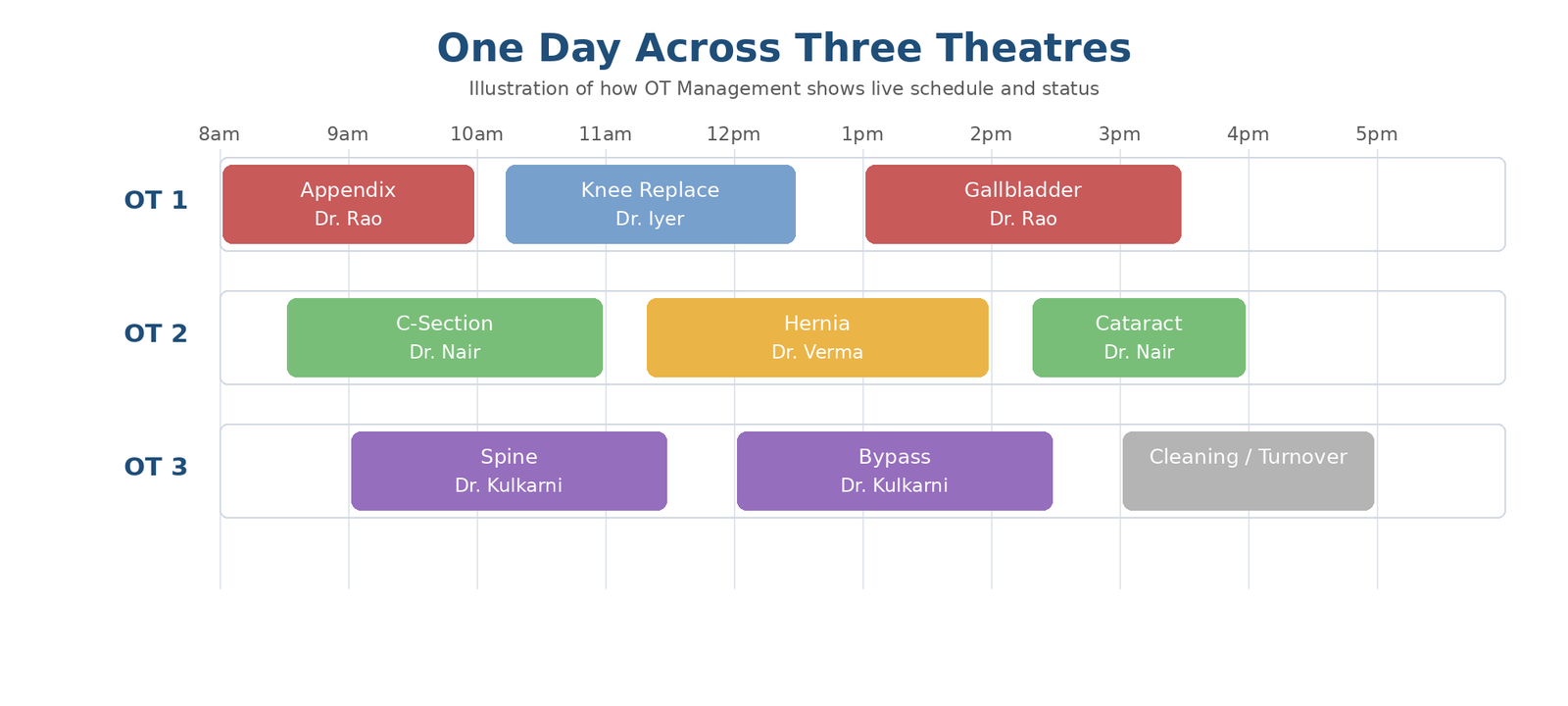
One schedule for every operation theatre, from booking a slot to closing the case, so surgeons, anaesthetists and nurses are never working off different information.
An operation theatre runs on minutes, not hours. A surgeon who arrives to find the previous case still being cleaned, an anaesthetist double-booked across two theatres, an instrument tray that was never confirmed ready — any one of these pushes the whole day's list back. OT Management software gives the theatre one shared schedule and one record for every case, built for nursing homes with a single theatre as much as for hospitals running four or five theatres at once.
What Goes Wrong Without It
Most OT delays trace back to a handful of repeat problems:
None of these need more staff to fix. They need one shared view that every theatre works from.
Business Objective
The OT module exists to protect the theatre's time. That means fewer scheduling clashes, cases that start closer to their planned time, and a complete record of what happened in each theatre without relying on a paper register that only the theatre in-charge can read.
Key Features
OT Scheduling
Every theatre's day is visible in one place. A new case can only be booked into a free slot, so two surgeons are never assigned the same theatre at the same hour.
Surgeon and Anaesthetist Allocation
Each case is linked to its surgeon, assisting staff and anaesthetist. If someone is already booked elsewhere at that time, the system flags it before the clash becomes a real problem.
Pre-Op Checklist and Consent
Consent form status, fitness clearance and allergy notes are attached to the case, so the team walks in knowing what's confirmed and what's still pending.
Instrument and Equipment Tracking
Trays, implants and equipment needed for a case can be marked ready in advance, cutting down on last-minute runs to the store.
Surgical Team Coordination
Nurses, technicians and the anaesthesia team see the same case list and timing, so a shift change mid-list doesn't mean someone loses track of what's next.
Post-Op Recovery Handoff
Once a case ends, the patient's recovery notes and vitals move with them to the recovery area or ward, instead of being relayed verbally.
OT Billing
Procedure charges, implants used and theatre time are captured against the case, so the bill reflects what actually happened in the theatre.
A Day in the OT: How Scheduling Works
Here's roughly how a single case moves through the system, from booking to the patient leaving the theatre.
Safety and Compliance
Surgical safety checklists exist because the same few mistakes — wrong site, wrong patient, an uncounted swab — cause most preventable harm in a theatre. OT Management keeps this check built into the workflow itself rather than as a separate paper form nobody circles back to.
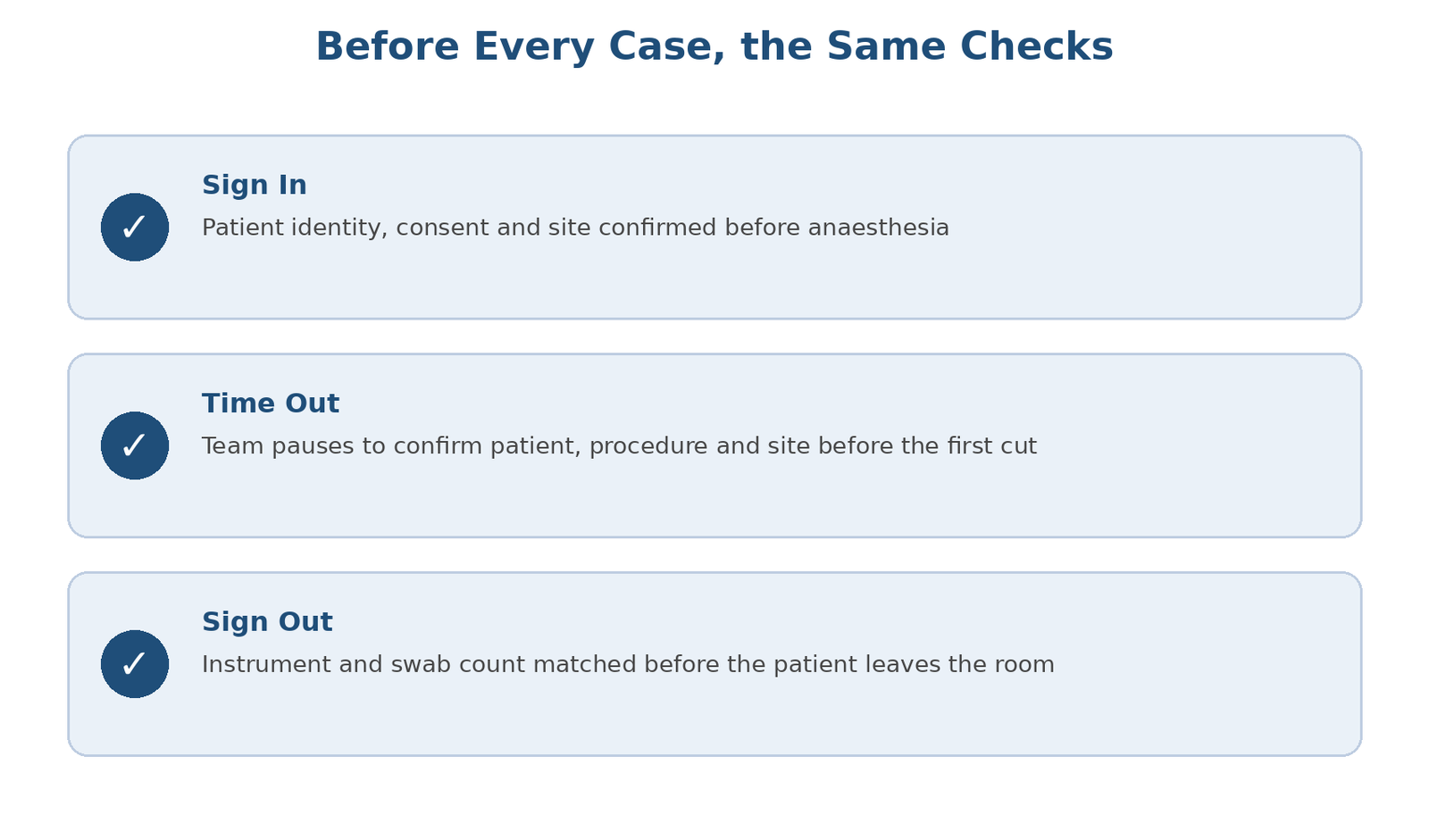
Every completed checklist is saved against the case record, which matters as much for accreditation and audits as it does on the day itself.
Who Can Use It?
Integration With Other Hospital Modules
A case usually starts as an admitted patient under IPD Management , and returns there — or to Ward Management — for recovery once the procedure is over. Pre-op investigations are drawn from Lab Management , and a patient first seen through OPD Management carries the same record into the theatre booking, with nothing re-typed along the way.
Reports & Analytics
Because every case is logged as it happens, theatre performance can be reviewed without anyone compiling a manual register.
Security & Data Management
Consent forms, surgical notes and patient identifiers are sensitive by nature. Access follows staff role, so a technician sees scheduling and instrument status while clinical notes stay visible only to the surgical and nursing team involved in that case. Changes are logged, data is backed up regularly, and the hospital retains ownership of its own records.
Why Choose I Can Care Flow
I Can Care Flow builds the OT module to work the way an actual surgical day runs — lists that shift, cases that overrun, and staff who need the schedule to be right without extra paperwork. It sits inside the same connected system as OPD, IPD, wards, labs and billing, set up around your own theatres and surgical teams.
FAQs
Can two surgeries be booked into the same theatre by mistake?
No. The schedule only allows a new booking into a slot that's actually free, so an overlapping booking is flagged before it's confirmed.
Does it track whether the safety checklist was actually completed?
Yes. Sign in, time out and sign out are recorded against the case, so there's a clear record of whether each step was done.
What happens if an anaesthetist is booked for two cases at once?
The clash is flagged at the time of booking, before both cases are confirmed, rather than being discovered on the day.
Is this useful for a hospital with just one operation theatre?
Yes. Even a single theatre benefits from clear scheduling, pre-op checklists and a proper record of every case.
Give Every Theatre One Reliable Schedule
Ask I Can Care Flow for a walkthrough of the OT module on your own theatres, surgeons and case types.